
Nov. 19, 2025
One of the most common concerns is whether an induction boiler is really more efficient than traditional resistive electric boilers. In practice, induction boilers can achieve very high thermal efficiency, often in the range of 97 % to 99 %, because they convert almost all of the electrical energy into heat with minimal loss. This makes them competitive with conventional electric boilers, but their real advantage lies in their operational stability and control rather than huge gains in raw efficiency.
That said, some users argue that the theoretical efficiency gains are not always fully realized in everyday systems. In cases where boiler cycling is frequent or heat demand is low, the efficiency advantage may be less dramatic. Still, for many homeowners and building operators, induction boilers represent a very efficient way to deliver reliable heating.
Induction boilers have several attractive benefits: they have no traditional heating elements that can burn out, and because the heating is based on magnetic induction, there is much less scale build-up. This means less maintenance over time compared to conventional electric boilers that rely on resistive elements that accumulate limescale.
On the safety side, induction boilers physically separate the induction coil from the water; there is no risk of electrodes or exposed heating elements in direct contact with water. Also, many models include built-in protections — dry-run prevention, overheat protection, and pressure safety — which make them inherently safe when installed correctly.
However, there are disadvantages too. Induction boiler units can be large and heavy, making installation more demanding. Their upfront cost is higher than simpler electric boilers. Also, if the system is poorly sized or improperly installed, there could be unexpected electric or thermal stresses.
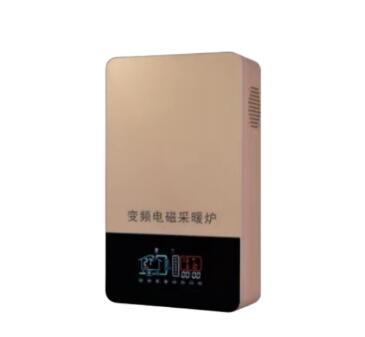
Understanding how induction heating works is key. In an induction electric boiler, a high-frequency alternating current flows through a coil, creating a magnetic field. This magnetic field induces eddy currents in a metal shell (often steel), and the resistive heating of that shell raises its temperature. Water (or another heat-carrying fluid) circulates around or inside that shell and absorbs the heat, thereby warming up.
This principle — heating via induced currents — avoids some of the common drawbacks of resistive heating. Because the heated surface is the metal shell itself, and not a separate heating element, wear is less of a concern, and heat transfer can be very efficient.
Cost is always a hot topic. Since induction boilers use advanced coils, control electronics, and specialized design, their initial purchase price is typically higher than basic electric boilers or immersion heaters. Moreover, the installation may require extra considerations: adequate space, good electrical supply, possible buffer tanks, and professional mounting.
Is it worth it? For many users the answer is yes — particularly in homes or buildings where longevity, low maintenance, and stable heating are valuable. Over time, the reduced maintenance costs, long lifespan, and high efficiency can offset the higher upfront cost. In addition, induction boilers produce no emissions, making them attractive for clean heating in areas without gas.
Reliability is a major concern for anyone investing in a heating system. Induction boilers are often praised for their durability: because they don’t rely on traditional heating rods or elements, there is less risk of burnout or failure due to scaling. Many manufacturers and users report that induction boilers can operate for many years without significant degradation.
Practically, this means lower maintenance needs, fewer replacements, and a long service life. Some testimonials claim decades of operation, assuming regular checks are made on safety systems and circulation. When designed and installed properly, these boilers offer a stable, long-term solution for heating.
These five themes reflect the tension between cost, performance, reliability, and safety — all critical factors in heating system decisions. If you're considering an induction electric boiler, here are key practical suggestions:
Evaluate your electricity supply: Make sure your home or building can support the power draw of an induction boiler.
Calculate lifecycle cost: Look beyond just purchase price — factor in maintenance savings and expected longevity.
Plan for installation: You’ll need professional installation, possibly a buffer tank, and safety systems.
Consider water quality: While scale is less of a problem, water treatment still helps maximize performance.
Monitor and maintain: Even though induction boilers need less maintenance, regular checks (pressure, circulation, safety) help keep performance high.
Induction electric boilers offer a modern, efficient, and reliable alternative to traditional electric heating systems. While the upfront cost is higher, their advantages — including long lifespan, low maintenance, and high safety — make them an increasingly popular choice for clean, electric-based heating.
By understanding how they work, what challenges they bring, and how they perform in real-world use, potential users can decide whether an induction boiler is right for their heating needs. If you want help comparing different models or estimating operating cost for your home, I can walk you through that too.
Previous: Сравнение систем загрузки SMT для печатных плат
Next: Ozone Generators vs. Traditional Methods: Revolutionizing Agriculture Efficiency
If you are interested in sending in a Guest Blogger Submission,welcome to write for us!

All Comments ( 0 )