
Dec. 11, 2025
Hydraulic fittings are crucial components in fluid power systems, allowing for the efficient transfer of fluids under pressure. As a manufacturer of metric hydraulic fittings, it is essential to understand the common materials used in these fittings and their advantages and disadvantages. The most prevalent materials include steel, brass, aluminum, and plastic. Each material serves different applications, and choosing the right one can significantly impact system performance and reliability.
Hydraulic fittings are manufactured using various materials based on the specific requirements and environments they will operate in. Here’s a closer look at the most common materials used in hydraulic fittings:
Steel is the most widely used material for hydraulic fittings due to its strength and durability. It can withstand high pressures and is ideal for heavy-duty applications.
Brass fittings are known for excellent corrosion resistance and good machinability. They are often used in scenarios where aesthetics and corrosion resistance are critical.
Aluminum fittings are lightweight and resistant to corrosion. They are ideal for applications where weight is a concern, such as in aviation and aerospace.
Plastic fittings are lightweight and resistant to chemicals but generally not suitable for high-pressure applications. They are commonly used in low-pressure hydraulic applications.
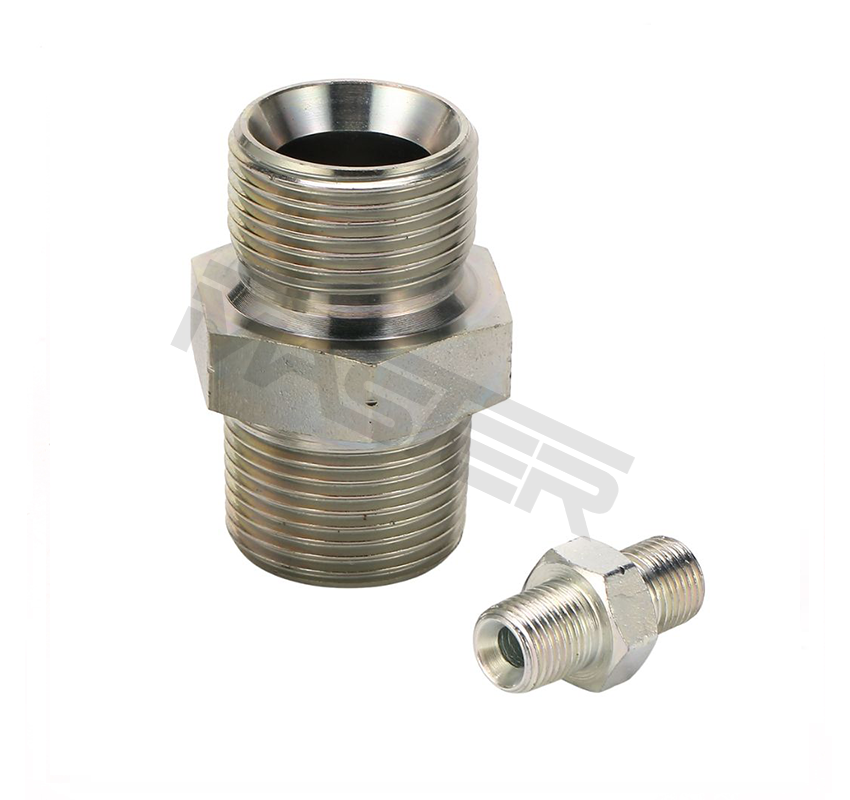
Pros:
High strength and durability.
Economical for large-scale applications.
Suitable for high-pressure systems.
Cons:
Prone to rust without proper treatment.
Heavier compared to other materials.
Pros:
Corrosion-resistant.
Excellent for threaded applications.
Good for connecting dissimilar metals.
Cons:
More expensive than steel.
Softer material; can deform under high pressure.
Pros:
Lightweight, reducing overall system weight.
Resistant to corrosion without coatings.
Cons:
Less strong compared to steel.
More expensive than steel fittings.
Pros:
Lightweight and easy to install.
Resistant to many chemicals and corrosion.
Cons:
Not suitable for high-pressure systems.
Can degrade over time under UV exposure.
| Material | Strength | Corrosion Resistance | Weight | Cost |
|---|---|---|---|---|
| Steel | High | Low (rusts) | Heavy | Low |
| Brass | Medium | High | Medium | Medium |
| Aluminum | Low-Medium | High | Light | High |
| Plastic | Low | Medium | Very Light | Low |
Choosing the right material for hydraulic fittings plays a significant role in the efficiency and safety of hydraulic systems. Steel is an excellent choice for high-pressure applications, while brass fittings are ideal for conditions requiring corrosion resistance. Aluminum and plastic components can provide specific benefits such as weight reduction and cost-effectiveness. Understanding the pros and cons of these materials will help manufacturers and buyers make informed decisions that align with their operational needs and cost considerations.
Previous: Rustfritt Stål Sporflens Adapter – Holdbarhet og Kvalitet for Ditt Prosjekt!
Next: ¿Por qué elegir una cruz igual ranurada de acero inoxidable para tu proyecto?
If you are interested in sending in a Guest Blogger Submission,welcome to write for us!

All Comments ( 0 )