
Aug. 22, 2025
When it comes to machining and finishing in industries like aerospace, optics, and semiconductors, ultra-precision diamond tools have become essential. They deliver unmatched accuracy, surface quality, and longevity compared to conventional cutting tools. However, professionals and enthusiasts often raise recurring questions about their use, performance, and applications. Below, we dive into the most common questions and provide clear, detailed insights.
Ultra-precision diamond tools are designed for applications where extreme accuracy and fine surface finishes are critical. They are commonly used in industries that require tolerances within nanometers or microns, such as:
Optics manufacturing – cutting and polishing lenses, mirrors, and optical molds.
Aerospace – machining lightweight but tough materials like titanium and composites.
Semiconductors and electronics – creating wafers and micro-components.
Medical devices – precision machining for implants and surgical instruments.
Their ability to produce mirror-like finishes without secondary polishing makes them indispensable in high-tech manufacturing.
Compared to carbide or ceramic tools, diamond tools stand out in several ways:
Hardness – Diamond is the hardest known material, giving the tool superior cutting ability.
Surface finish – Achieves ultra-smooth finishes that other tools cannot match.
Longevity – Diamond edges stay sharper for much longer under the right conditions.
Cost-effectiveness – While initial costs are higher, the extended lifespan often reduces long-term expenses.
However, diamond tools are not ideal for every situation. For example, they are unsuitable for machining ferrous metals at high temperatures because diamond reacts with iron.
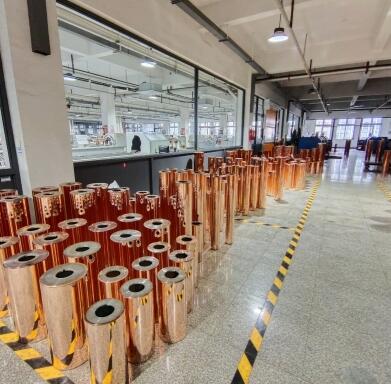
These tools excel at machining non-ferrous materials, including:
Aluminum and copper alloys
Tungsten carbide (with specialized bonding techniques)
Ceramics and glass
Silicon and other semiconductor materials
Plastics and composites
They are particularly effective in brittle or delicate materials where traditional tools would cause chipping, cracks, or surface defects.
The lifespan of diamond tools depends on multiple factors:
Material being machined – Softer materials extend tool life, while harder or abrasive ones shorten it.
Operating conditions – Correct spindle speed, feed rate, and lubrication extend longevity.
Maintenance – Regular cleaning and proper storage prevent damage.
Under ideal conditions, ultra-precision diamond tools can last 10 to 20 times longer than conventional tools, making them highly economical in long production runs.
When choosing the right diamond tools for gravure, several factors come into play:
Tool geometry – The shape and edge angle must suit the intended application.
Type of diamond – Natural, polycrystalline (PCD), or single-crystal synthetic diamonds each perform differently.
Machining setup – Rigid, vibration-free machines are essential to achieve ultra-precision results.
Budget and production scale – Higher upfront investment is justified in high-volume, high-accuracy industries.
Working with suppliers who understand specific machining needs is crucial for selecting the best tool.
Ultra-precision diamond tools are not just advanced cutting instruments—they are the foundation of industries where accuracy, efficiency, and reliability are non-negotiable. By understanding what they are used for, how they compare to other tools, which materials they handle best, and how to maximize their lifespan, manufacturers can make informed decisions that improve both quality and productivity.
Previous: The Complete Guide to Diamond Core Drill Bits
Next: None
If you are interested in sending in a Guest Blogger Submission,welcome to write for us!

All Comments ( 0 )